
Your Power Bill Is Going Up
AI Data Centers Aren't the Whole Reason
BUSINESS INTERRUPTION
9 min read
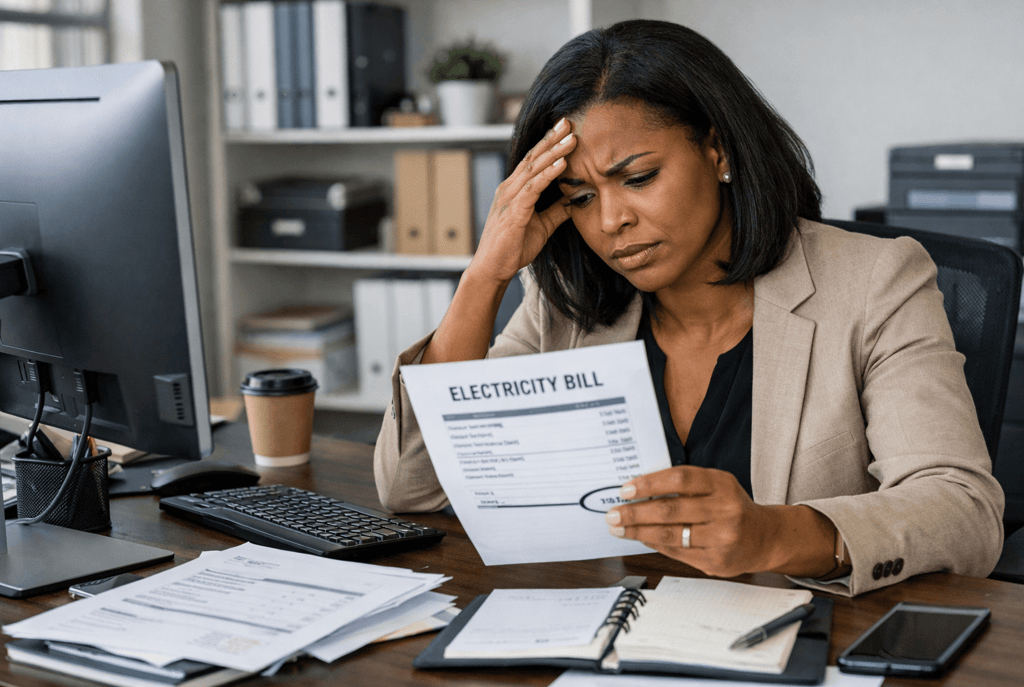
Image credit: Elinaetly
If your power bill feels rude lately, that’s because a lot is happening at once.
AI data centers are using more electricity, and that’s part of the story. But they’re not the whole story. The fuller story is that the United States is asking an old power system to do more work than it used to, in more places than it used to, while many parts of that system still need expensive upgrades.
On top of that, fuel costs still matter, weather still matters, air conditioning demand still matters, and more parts of the economy now run on electricity around the clock. So when people say your bill is rising because of AI, the honest version is yes, partly, but not only because of AI.
The headlines can make it sound like one giant building full of computers showed up, plugged itself in, and personally kicked your electric bill through the ceiling. That makes for a nice villain. It’s simple, dramatic, and easy to point at. But the real picture is more like an overworked kitchen during dinner rush.
The fryers are on, the ovens are on, the dishwasher is running, the delivery guy is late, the refrigerator is making a weird noise, and now somebody just walked in and ordered for a party of twelve. The new table matters, sure. But the kitchen already had problems before they showed up.
That’s what has been reported around U.S. power demand. Data centers are growing fast, especially the ones tied to artificial intelligence. AI systems need large numbers of specialized computer chips and servers. A server is basically a powerful computer that stores, processes, and sends information.
A data center is the building where huge numbers of those machines sit and run nonstop. These buildings need massive amounts of power, and they also need cooling because those machines get hot. Very hot.
So yes, AI data centers are increasing demand for electricity. That part is real. But the reporting also says the country’s electricity prices have been rising for other reasons too. Utilities have been spending heavily on transmission and distribution upgrades. Transmission means the high-voltage lines that move electricity over long distances.
Distribution means the local network that gets power into neighborhoods, stores, office buildings, and factories. A lot of this equipment is old. Some of it needs repairs, replacement, and to be expanded because the system was not built for all the new things it now has to support.
And that support list keeps getting longer. Homes and businesses are using more cooling during hotter periods. More companies are electrifying operations. That means shifting more equipment and systems onto electricity instead of using other fuels. There’s also more domestic manufacturing demand in some places. Add all that together, and the grid is being asked to perform like a much younger machine than it really is.
That’s why this is not just a data center story. It’s a grid story, an infrastructure, fuel-cost, demand, and cost-shifting story, because one of the biggest questions is who ends up paying for new lines, substations, upgrades, and generation needed to serve very large new users of power?
That last part is a big one. A substation, by the way, is a facility that helps move and control electricity as it travels through the grid. It’s not glamorous. Nobody posts vacation photos from a substation. But when more power-hungry facilities show up, utilities may need more of them, or need bigger ones, or need other expensive improvements nearby.
Then regulators and power companies have to figure out who should carry those costs. Should the giant new customer pay most of it because they created the need? Or should some of those costs get spread across everyone else on the system?
The bill for meeting that demand could get passed around like an unwanted group dinner receipt.
The first businesses affected are the obvious ones. Data centers themselves are directly exposed because they need huge amounts of power and stable supply. But they’re far from alone. Manufacturers are directly exposed because factories rely on heavy machinery, process equipment, controls, and steady operating schedules.
A brief interruption can slow production, ruin a batch, delay orders, or leave expensive equipment offline. Cold storage facilities and food businesses are directly exposed because they rely on refrigeration. Hospitals and healthcare facilities are directly exposed because they need uninterrupted power for equipment, cooling, lighting, records, and care delivery.
Warehouses, hotels, laundromats, grocery stores, large office buildings, retailers, and service businesses are exposed too, especially if they rely on HVAC, refrigeration, elevators, pumps, digital systems, or time-sensitive operations.
And then there's the second group. These are businesses that may not look energy-heavy at first glance but still depend deeply on power and connected systems. Think technology services, professional offices, clinics, call centers, cloud-based companies, and all the ordinary businesses that now run on software, internet access, digital payments, remote servers, and connected vendors.
The lights staying on is one thing. The systems staying available is another. In modern business, one outage can now feel like three outages wearing a trench coat. The power goes out, the network goes down, the payment system stops, the scheduling app freezes, and now your staff is looking at you like you personally unplugged the building.
That’s why credible business insurance sources have been treating this issue as much more than a higher electric bill story. They have been reporting it as a business interruption, equipment breakdown, spoilage, supplier disruption, and in some cases a tech outage story.
Business interruption is a simple idea even though the name sounds stiff. It means the business loses income because something covered by the policy causes operations to stop or slow down. If a store can’t open, if a manufacturer can’t produce, if a food business loses operations, if a clinic can’t function normally, that lost income can become a real problem very quickly. The power bill may be annoying, but the missing revenue is what starts punching holes in the roof.
Insurance sources have been very clear that the financial damage from power-related problems often has less to do with the monthly utility bill itself and more to do with what happens after operations are disrupted. Lost sales, payroll still due, rent still due, inventory damaged, equipment damaged, customers going elsewhere, delayed reopening, missed contracts, and missed production.
The damage often comes from the chaos around the outage, not just the outage itself.
Insurers and risk advisers have described a set of protections that are meant to help businesses survive the bigger financial hit when power trouble turns into downtime.
The most commonly reported protection is business income coverage, which is sometimes also called business interruption coverage. This is the part meant to replace income the business loses when it can’t operate normally after a covered event.
It can also help with ongoing expenses the business still has to pay while it recovers. That matters to almost every type of business touched by this issue, from factories to grocery stores to healthcare providers to office-based firms.
Then there is extra expense coverage. This is the part meant to help pay the extra costs a business takes on to keep going or reopen faster. That could mean temporary relocation, temporary equipment, rush delivery costs, temporary repairs, or other emergency workarounds. If business income coverage helps replace what you lost, extra expense coverage helps pay for the scramble. And let’s be honest, the scramble is often where the money starts catching fire.
For many of the businesses mentioned above, utility service interruption coverage is one of the most important things reported by insurance sources. A lot of business owners assume that if the power problem happens away from their own property, coverage will just somehow understand their pain telepathically and step in.
Insurance sources have repeatedly warned that this is exactly the kind of assumption that can go badly. Utility service interruption or off-premises utility coverage is the part meant to address losses tied to utility trouble that happens away from the business’s own building.
If the problem is down the road, at a utility facility, on a transmission line, or somewhere else in the supply path, the business can still be shut down. The freezer still warms up, the machines still stop, the card reader still stops taking money, and the customer doesn’t care whether the outage happened in your building or three zip codes away.
Equipment breakdown coverage is another big part of what has been reported by business insurance sources. Property policies may not always respond the way businesses expect when the damage involves electrical arcing, mechanical failure, short circuits, surges, or related breakdowns.
A manufacturing line doesn't care that the failure was technically electrical. A refrigeration unit doesn’t say, “Well, at least this falls into a tidy policy category.” It just stops working and takes your afternoon with it.
For manufacturers, hospitals, data-heavy operations, food businesses, and facilities with HVAC or refrigeration dependence, the issue isn’t only whether the power went out. It’s whether the strain, surge, or interruption damaged the systems that let the business function after power came back.
Sometimes the nightmare isn’t the blackout, sometimes it’s the unhappy surprise waiting after the lights return.
Contingent business interruption is another term that comes up in this reporting, and it sounds fancier than it is. It means the business can lose income because somebody else in its business chain got hit. A supplier goes down, a customer goes down, or a critical outside service provider goes down.
The loss happens somewhere else first, but the pain arrives at your door anyway.
This is especially important in a power-stressed environment because modern businesses are tangled together in all kinds of ways, a manufacturer depends on suppliers, a retailer depends on logistics, a restaurant depends on distributors, a clinic depends on outside systems, and a data-reliant company depends on cloud providers and vendors. It’s all connected.
One weak link can turn into a very expensive game of dominoes.
For tech-reliant businesses, cyber coverage also enters the picture in some reports, especially where outages or operational failures affect digital services, outside providers, or tech-dependent operations.
This doesn’t mean every power problem is now magically a cyber event. It means many businesses now have operations so tied to digital systems and outside tech platforms that interruption can come through more than one door.
If your company’s work lives in cloud tools, remote infrastructure, payment platforms, software systems, or outside providers, the practical risk isn’t just physical darkness. It’s digital paralysis too.
Insurance sources aren’t saying businesses can stop power demand growth, they’re saying businesses can better protect themselves from the financial chain reaction that follows when the grid stumbles or equipment fails.
That’s especially worth knowing for the sectors most directly affected.
For manufacturers, the big risk is production stopping, machinery going down, and orders being delayed. The insurance story for them focuses heavily on business income, extra expense, equipment breakdown, and utility-related interruption.
For cold storage, grocery, food production, and restaurants, the big risk is spoilage, refrigeration failure, and income loss during closure or reduced operations. For hospitals and healthcare operations, the risk includes interrupted care, damaged schedules, equipment dependence, and operational slowdown.
For data-heavy firms and tech-based operations, it includes both physical power dependence and dependence on connected digital systems. For retailers, offices, hotels, laundromats, and service businesses, it includes closure, lost revenue, damaged equipment, spoiled stock where relevant, and slow recovery even after reopening.
Some insurance reporting stresses that reopening doesn’t automatically mean the business is fully back. Customers may not return immediately, orders may still be backed up, production may still be behind, staffing may still be messy, and systems may still be unstable.
The doors can be open while the business is still limping. That’s why recovery coverage and income protection after reopening show up as important pieces in these materials. Real life is rude that way, it doesn’t always end the scene when the lights come back on.
There’s also a very important limit to keep in mind in this story. These insurance sources aren’t describing insurance as a simple reimbursement for a higher monthly electricity bill. That’s not the way the story has been reported. The stronger theme is that insurance becomes valuable when rising grid strain or power instability turns into a covered event that causes actual operational loss.
That means closure, damage, breakdown, spoilage, supplier disruption, or tech-related interruption. So the insurance story here isn’t “your utility bill went up, congratulations, here’s a check.” The insurance story is “when the power problem becomes a real business loss, here are the protections that matter.”
The reports from insurance sources describe real tools for dealing with the most painful outcomes. They aren’t promising a perfect world. They’re describing ways businesses can avoid getting flattened when the grid, the equipment, or the outside network does something deeply inconvenient at the worst possible moment, which is of course exactly when such things love to happen.
Your power bill is going up because several big forces are hitting the system at once. AI data centers are one of them, they’re not the whole reason. The country is also dealing with old grid infrastructure, expensive upgrades, growing electricity demand, fuel-cost pressure, weather-related stress, and broader economic electrification. That’s the energy side of the story.
The business side of the story is that the sectors most directly affected are the ones that rely heavily on electricity, equipment, cooling, continuous operations, or connected digital systems. That includes data centers, manufacturers, food and cold storage operations, hospitals, healthcare facilities, retailers, warehouses, hotels, offices, laundromats, and a wide range of service and tech-enabled businesses.
Credible business insurance sources have been framing this as a downtime problem more than a bill problem. The most positive insurance answer they describe is not one magic solution. It’s a package focused on income loss, extra expense, utility interruption, equipment breakdown, supplier disruption, and in some cases tech-related interruption.
The monthly bill is only one pain point, the bigger danger comes when power strain becomes business strain.
The scary part isn’t just that power costs more.
It’s that so much of modern business now depends on electricity staying steady, equipment staying alive, and outside systems behaving themselves.
Which, as anyone who has ever tried to print one document five minutes before a deadline already knows, isn’t always a safe bet.
Legal
No spam. Unsubscribe anytime.
Explore
Business insurance, simplified.
Contact
Join the Newsletter
© 2026 Elinaetly. All rights reserved.