
Have You Heard? New DarkSword iPhone Attack Puts Older And Out-Of-Date Devices At Risk
Google Says the DarkSword Attack Has Been Active Since November 2025, While Apple Says Updated iPhones Are Protected and Older Devices Should Be Updated Right Away
CYBER INSURANCE
9 min read
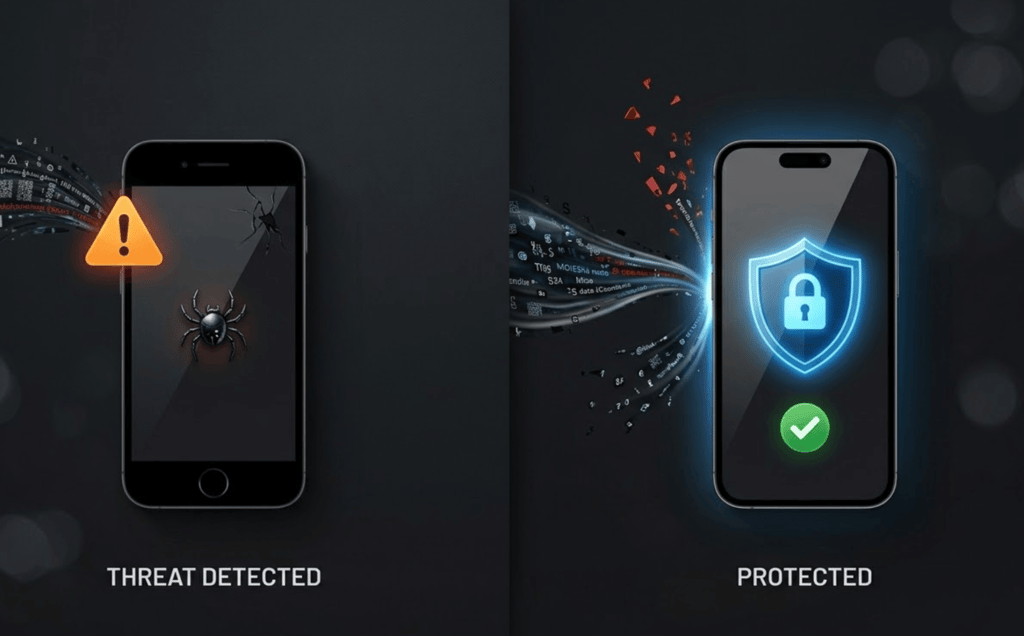
A newer version of the iPhone attack tool called DarkSword is now a bigger concern because it's no longer linked to just one attacker or one hidden campaign.
Google’s cyber threat team says DarkSword has been around since at least November 2025 and has already been used in separate attacks by several spyware companies and suspected government-backed hackers.
Google specifically says it saw DarkSword activity tied to Saudi Arabia, Turkey, Malaysia, and Ukraine. This wasn't a one-off lab finding or an online rumor. It was already being used in real attacks before many people even knew its name.
DarkSword isn't just one bug. It's what security researchers call an exploit chain. In simple terms, that means attackers combine several separate software flaws to break through one layer of protection after another until they can fully take over the device.
Google says DarkSword used six zero-day vulnerabilities. A zero-day vulnerability is a software flaw that attackers are already using before a fix is publicly available. In this case, Google says the attack chain was used to fully compromise iPhones running iOS 18.4 through iOS 18.7. The attacker can gain deep control of the phone instead of only causing a crash or a small glitch.
Google also says DarkSword was used to install three different spyware families called GHOSTBLADE, GHOSTKNIFE, and GHOSTSABER. Spyware software quietly watches what you do, steals data, or gives an attacker hidden access to your device.
People who kept their software updated weren't at risk from these reported attacks. Apple says the latest updated versions of iOS 15 through iOS 26 are already protected.
Apple also says it released extra protections on March 11, 2026 for older devices running iOS 15 and iOS 16. For devices still on iOS 13 or iOS 14, Apple says users need to move to iOS 15 to get those protections.
It also says Lockdown Mode blocks these specific attacks, even on out-of-date software, though Apple still urges users to update as soon as possible.
A lot of people think, “My phone still turns on, my apps still open, and my texts still go through, so I’m fine.”
But software attacks don't care whether your screen looks normal. A phone can work perfectly and still have an open security hole. Think of it like a front door that shuts all the way but no longer locks. From the sidewalk, everything looks normal. From the attacker’s side, it's an opportunity. Apple’s message here is basically this: if your iPhone is current, you're in much better shape; if it's behind, update it now.
Apple’s current security releases page says the latest iPhone software on the main track is iOS 26.3.1. It also lists special support updates for older devices, including iOS 16.7.15 for iPhone 8, iPhone 8 Plus, and iPhone X, and iOS 15.8.7 for iPhone 6s, iPhone 7, and iPhone SE (1st generation).
Apple’s iOS 18 security track applies to devices such as the iPhone XS, iPhone XS Max, and iPhone XR, which are older but still supported on that branch. So the risky pattern here isn't simply old phone equals doomed.
The risky pattern is an older phone running older software with delayed updates.
These attacks involved web attacks. That means the threat can begin when someone visits a harmful website or taps a bad link. Apple warns that on an out-of-date iPhone, visiting a compromised site or opening a malicious link can put the data on the device at risk of theft.
It also says Apple Safe Browsing in Safari is on by default and blocks the malicious web domains identified in these attacks. Google says it also added DarkSword-linked domains to Safe Browsing. That's good news, but it doesn't replace software updates. Blocking known harmful websites helps, but if attackers change domains or delivery methods, outdated devices are still more exposed.
The average person doesn't use an iPhone only for calls, photos, and social apps. A phone now holds work email, banking alerts, group chats, customer messages, payroll apps, approval links, cloud file access, saved passwords, and multi-factor login codes.
For many people, it's also the backup device they use when the laptop battery dies, the home Wi-Fi goes out, or they need to approve something while moving between meetings. So when a serious iPhone exploit appears, it isn't just a phone problem.
It's potentially an identity problem, an access problem, and a business continuity problem. That's a practical conclusion from Apple’s warning about data theft and Google’s description of full device compromise.
A company might think it has done a solid job securing laptops, company email, and cloud systems, but still allow sensitive business access through personal phones. A sales manager might approve discounts from an iPhone, a finance lead might approve payments from an iPhone, a recruiter might access candidate records from an iPhone, and a founder might use an iPhone for investor messages, legal approvals, banking alerts, and company chat.
If that phone is where email, chat, multi-factor authentication codes, password manager access, and cloud app sessions all come together, then the phone isn't just a convenience device. It's part of the company’s security perimeter. That's a reasonable business takeaway from Apple’s and Google’s descriptions of web-based compromise and data theft.
Imagine an employee working from home on a Tuesday morning. They're signed into Slack, email, Microsoft 365, and a payroll system. Their phone gets a link in a message that looks work-related. They tap it while half-listening to a Zoom call.
If the phone is fully updated, Apple says the reported DarkSword attacks shouldn't succeed. But if the device is old and not updated, web attacks like this can expose the data on the phone. That could include email access, login codes, saved credentials, contact details, internal files, or session tokens that keep the person signed into work services. The attack starts on a phone, but the impact can spread across the business.
Now picture a smaller company without a formal mobile security policy. Maybe it's a startup with 25 employees. People use personal iPhones for work because it's faster and easier. The CEO approves payments from the phone, the head of growth logs into ad platforms from the phone, the engineering lead uses the phone for Git notifications and one-time login codes, and the HR lead uses the phone for recruiting messages and employee records.
Nothing about that setup is unusual in 2026. But it also means one weak mobile device can become a doorway into finance, hiring, customer systems, and internal communications. That risk is exactly why these update notices matter much more than they did years ago, when phones were less connected to everyday work systems. This broader business exposure is strongly supported by how mobile devices are used and by the official description of web-based compromise.
Large organizations have a different version of the same problem.
They may have thousands of employees, corporate-issued phones, and security teams. But they also have executives, traveling staff, contractors, overseas employees, and bring-your-own-device programs that create exceptions and gaps.
All it takes is one senior person delaying updates for a week because they're too busy and using that same phone for email, travel links, calendar invites, document review, and authentication. Apple’s warning matters even more for those users because a targeted web attack doesn't need to look dramatic.
It can arrive as one link, one page load, or one moment of distraction. That's why Apple highlights Lockdown Mode as a protection layer for higher-risk users.
Google says DarkSword had been observed since at least November 2025, and Apple’s broader protection updates rolled out over time, including iOS 26.3, the March 11, 2026 updates for older devices, and Apple’s latest public user guidance in March 2026.
That timeline shows a hard truth about modern cyber risk: by the time many people hear the public warning, real attackers may already have been using the method for months. In other words, the headline often comes later than the attacker timeline. That's one reason routine updates matter so much. They protect users against threats they may not even know exist yet.
Google’s reporting also shows DarkSword wasn't used by one isolated group. It says multiple commercial surveillance vendors and suspected state-sponsored actors used it in separate campaigns.
Separate campaigns suggest independent operational use, not one copy-and-paste incident.
It points to a threat that spread across multiple users and operators. Once a capability moves beyond one small circle, the chances go up that more actors will study it, adapt it, or learn from it. That doesn't mean every criminal on the internet suddenly has DarkSword.
But it does mean defenders should treat this as a serious example of how advanced iPhone exploits can spread and become active across multiple threat groups.
The time between a new attack appearing and real organizations feeling pressure keeps getting shorter.
DarkSword is another example of that faster cycle. Advanced attacks are no longer something companies can treat as distant, rare, or only relevant to governments. The pressure reaches regular businesses much faster now, especially businesses built on cloud tools, remote access, and mobile approvals.
This is also where modern work habits make the risk bigger. Many employees now use phones as their second computer. They read contracts on them, approve invoices on them, check customer support queues on them, join group chats on them, and use them to sign into company systems.
In AI-heavy workflows, they may also use phones to access copilots, internal knowledge tools, summaries, prompts, and work documents. The phone becomes a bridge between personal life and work life. It's the same device used to order groceries, review a legal document, approve a payment, and log in to a dashboard.
That convenience is real, but so is the exposure when a serious mobile exploit appears. This is a practical, scenario-based conclusion from the official facts, not a company sales claim.
So what should regular users do?
Apple’s answer is simple: update now. Turn on automatic updates if possible. Don't ignore update prompts for days or weeks. If your device is old and can't run the newest system, make sure it's at least on the latest supported security version for that model.
If you're on a very old version like iOS 13 or iOS 14, Apple says you need to move to iOS 15 to receive these protections. Also keep Safari protections on, and if you're in a higher-risk group, look at Lockdown Mode.
Apple’s own update pages explain how to update wirelessly or from a computer if needed.
What should companies do?
First, stop treating mobile security as optional or secondary. If employees use phones for work access, those phones are part of the company’s security setup. Second, review BYOD, which means bring your own device, and make sure personal phones used for work meet minimum update standards.
Third, review multi-factor authentication.
If a phone holds the second factor for important business logins, then that phone is a critical asset. Fourth, look at executives and high-access users first. Fifth, create a clear internal message: if Apple says update today, that's not a suggestion. That's policy.
Those steps aren't listed by Apple in that exact wording, but they're very reasonable operational actions based on Apple’s warning and Google’s threat description.
Say a marketing director is traveling. They're using hotel Wi-Fi, checking email on an iPhone, opening links from internal chats, approving campaign changes, and signing into cloud dashboards. The phone is also where they receive login codes. If that device is outdated, one malicious link can turn a travel day into an incident response day.
Maybe the attacker gets access to email, sees calendar data, resets passwords for connected tools, or maybe they start with the phone and pivot into cloud services.
Again, the exact company impact will vary, but the logic is clear: when one device controls many doors, the value of that one device goes way up for attackers.
There's one more reassuring point in this story, and it's worth stating clearly. This isn't a case where Apple and defenders were helpless. Apple says updated devices were already protected from the reported attacks.
Google says iOS 26.3 fixed all six security flaws used in DarkSword, with most fixed even earlier. Apple also released extra protections for older unsupported branches and says Safari’s safe browsing blocks the known malicious domains tied to these attacks. So this is a serious story, but it's not a hopeless one. The defenses exist, the problem is that defenses only work if people actually install them.
An iPhone is no longer just a personal gadget. For many people it's a work badge, password helper, communication hub, document reader, payment approver, backup browser, and identity device all in one. That's why an iPhone exploit now lands like business news, not just tech news.
DarkSword shows what happens when high-end mobile attack tools move through the real world while many users still treat update prompts like an inconvenience, attackers move early. Defenders publish fixes, the users and organizations that move fastest after that are the ones most likely to stay out of trouble.
Employees should check which iPhone and iOS version they're using and install the latest supported update immediately. If the device is too old for the newest version, it still needs the newest security update available for that model. Apple’s current security releases page is the best place to verify which update track applies to which phone.
Managers and IT teams should identify staff who use iPhones for company email, chat, approvals, payroll, finance access, or login codes, because those phones have a larger business impact if compromised. That's especially true for executives, HR, finance, admins, legal, and customer-facing teams. This is a practical conclusion based on how the attack works and how phones are normally used for work access.
Organizations with remote or hybrid work should review whether personal phones are being used as trusted work devices without clear update rules. If so, that's a gap worth closing now, before the next mobile exploit story arrives.
This isn't just about DarkSword. It's about the bigger pattern DarkSword represents.
Legal
No spam. Unsubscribe anytime.
Explore
Business insurance, simplified.
Contact
Join the Newsletter
© 2026 Elinaetly. All rights reserved.