
Do Tech and Biz StartUps Need Commercial Auto Insurance?
Or Is It Only for Delivery Businesses, Trucking companies, or Fleets?
COMMERCIAL AUTO
7 min read
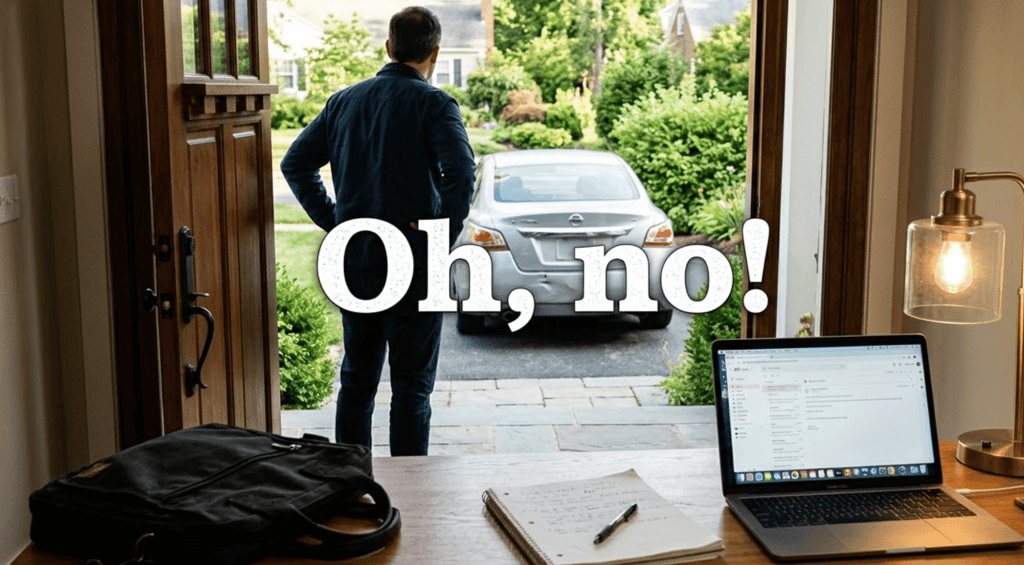
A lot of tech, AI, and business startups hear the words commercial auto insurance and instantly think, “That's for trucking companies, delivery vans, contractor fleets, and businesses with ten logo-wrapped vehicles in a parking lot.”
In other words, they think it's for the obvious companies. The companies that drive all day. The companies whose entire business visibly sits on four wheels.
That assumption is exactly where a lot of startups get themselves into trouble.
Because in the real world, especially in America, plenty of startups use cars for work without thinking of themselves as driving businesses.
The founder drives to a client meeting, the operations employee uses a personal car to pick up equipment, a remote worker drops off documents, heads to a co-working space, visits a customer, or runs a last-minute errand for the company, a team member takes a company car to an event, a new hire with a laptop bag and a calendar invite suddenly becomes a person driving for business. And just like that, a startup that thinks it's fully digital is dealing with very physical risk.
That's why the real question isn't whether your company looks like a delivery business, it's whether anyone at your startup drives for work in a personal car or a company car. If the answer is yes, then commercial auto is no longer somebody else’s problem.
Fast-moving companies love to operate on speed, trust, improvisation, and the sacred phrase, “Can you just handle this real quick?” One day a new employee is onboarding from home. The next day they're driving to a client site, a team meetup, a storage unit, a printer, an office supply store, or an off-site because someone needed something done fast.
Nobody stops the meeting to say, “Before you touch that steering wheel, let’s confirm how our policy handles this.” Everybody just assumes the company’s insurance situation somehow kept up with the company’s chaos.
That's a very comforting belief but also a very dangerous one.
Commercial auto coverage doesn't magically expand because your startup hired more people, added more tasks, or started sending employees across town more often. It doesn't automatically update because your remote team now works from homes, cafes, coworking spaces, airports, client offices, and temporary event spaces.
It doesn't automatically become crystal clear because your manager sent a message asking someone to make a quick drop-off. Growth creates driving exposure faster than most startups create rules, and that's where the headaches begin.
A lot of employers assume that once someone joins the company, that employee is naturally folded into every business risk area, including driving. Not always. Whether a person is covered, how they're covered, and under what circumstances they're allowed to drive for work can depend on policy terms, internal approvals, driver disclosures, and whether leadership ever clearly decided who's actually supposed to be behind the wheel for business purposes in the first place.
That sounds like common sense until you remember how many startups are being held together by Notion docs, ambition, caffeine, and crossed fingers.
And employees are often just as confused. A worker using a personal car for a company errand may assume the company already figured out the insurance side of that decision. Why wouldn’t they? The boss asked, the trip helps the business, the calendar says client meeting, and the mileage gets reimbursed. Surely that means the coverage part is handled too, right?
Not necessarily.
That's one of the biggest misunderstandings in startup life. A personal car used for work doesn't suddenly stop being a personal car just because the company benefited from the trip. That can create a very awkward overlap between the employee’s personal auto insurance and the company’s business exposure.
This is why hired and non-owned auto issues matter so much for startups.
If the company is asking or expecting employees to use personal cars for work, but hasn't properly addressed that exposure, the employer can discover too late that it created liability without fully preparing for it. And the employee can discover, at the exact worst moment, that driving for work and fully protected by the company aren't the same thing.
This gets even murkier in work-from-home and hybrid businesses. In older office setups, people liked to pretend the line was neat. Home to office was personal. Business travel after that was business. Cute. Very 2019.
In a remote or hybrid startup, the line is messier. An employee may start the day answering emails in a spare bedroom, then drive to a customer, a team meetup, a co-working space, an event venue, or a storage location for company gear. At that point, the company is no longer dealing with some old-school, one-office driving pattern. It's dealing with modern startup driving: scattered, casual, constant, and easy to underestimate.
And that's why so many tech, AI, and business startups ask the wrong question. They ask, “Do we have a fleet?” or “Are we a delivery business?” when they should be asking, “Do our people drive for work at all?”
If your startup has employees using personal cars for office runs, client visits, recruiting events, equipment pickups, off-site meetings, conferences, or last-minute business tasks, then yes, you're in commercial auto territory whether or not anybody in the company likes that phrase.
Then come the gray areas, which are where this stops being theoretical and starts becoming a real mess.
Maybe the employee drove to a client meeting in a personal SUV because the company said it was easier, maybe someone used a company car for a lunch run during a workday, maybe a remote employee was parked, answering a work call, when something happened.
Maybe a new hire was never clearly told what driving tasks were allowed and just assumed anything work-related counted, or maybe a manager casually approved something that the policy would have preferred not to see at all. These are the kinds of normal-looking startup moments that later become very expensive insurance conversations.
And once there's an accident, everybody suddenly becomes deeply interested in details nobody cared about before. Which policy responds first? Does the employee’s personal insurer get dragged into it? Does the company’s commercial auto coverage step in immediately, or only in certain ways?
Who pays the deductible? Was the driver authorized? Was the trip clearly work-related? Was the vehicle one the company intended to cover? Did anyone report prior dents, tickets, or license problems? Did the company put any driving rules in writing, or was the whole system operating on vibes and trust falls?
That's when the room gets quiet.
Employers don't want to hear that a casual business errand in an employee’s personal car may have exposed the company to a bigger liability problem than expected.
Employees don't want to hear that their own insurance may suddenly become part of the story because they were just helping out.
But that's exactly why commercial auto matters so much for startups. It's not only about obvious company vehicles, it's about all the normal business driving that modern startups treat like no big deal until it becomes a very big deal.
Fast-growing companies also have a habit of expanding what counts as a vehicle without thinking much about it. First it's a personal car, then it's a company car, a rented van for an event, and somebody borrows a vehicle to move gear.
The business keeps changing, and everybody assumes the policy is stretching politely in the background to keep up. Maybe it is, maybe it's not.
That's kind of the problem.
Startups often outgrow the original assumptions behind their coverage before anyone stops to review whether the policy still matches the way people actually move through the business.
The small stuff matters too, which is annoying because startups love to dismiss small stuff until it turns into giant stuff.
A speeding ticket, scratched company car, minor bump in a parking lot, license issue, or near miss nobody mentions because it wasn’t serious.
Businesses that take commercial auto seriously usually want clear reporting around those things, because little driver issues have a bad habit of turning into larger underwriting or claims problems later. Companies that never explain reporting expectations are basically betting that no employee will hide anything uncomfortable until renewal time, which is a bold and hilarious amount of faith in human nature.
Modern insurers may care how startups manage driving risk as they grow.
That can mean questions around driver screening, telematics, GPS tracking, dash-cams, phone-use rules, or other safety expectations depending on the carrier and the policy. The exact setup varies, but the larger point is simple: the more complex your startup becomes, the weaker we trust people to be careful starts sounding as an actual business strategy.
And that's really the answer to the title question.
Do tech and biz startups need commercial auto insurance?
If nobody in the business ever drives for work in a company car or a personal car, maybe the issue is smaller. But that's not how most American startups actually operate.
In the real world, founders drive. Employees drive, remote workers drive, and people use their own cars for client visits, equipment pickups, team events, document drop-offs, office runs, and all the little business tasks that seem harmless right up until something goes wrong.
So no, commercial auto isn't only for delivery businesses, trucking companies, or fleets. It's also for startups whose employees and employers are using cars to keep the business moving.
That's the part many startups miss.
You don't need a fleet of vans to have commercial auto exposure, you just need one employee in one personal car doing one business task under one fuzzy assumption.
And that's exactly why startups get caught off guard.
So the smarter move isn't to shrug this off because your company is in tech, AI, software, consulting, or some other business that thinks of itself as digital-first. The smarter move is to ask the boring questions before the claim happens.
Who's allowed to drive for work? In what vehicles? For which tasks? Under what rules? Using personal cars, company cars, or both? Backed by what actual coverage? With what reporting expectations? With what understanding about deductibles, liability, and personal insurance involvement?
Those questions aren't overkill, they're basic operations for a modern startup.
Because once employees and employers are using personal cars or company cars for business, commercial auto isn't some random trucking issue out on the highway somewhere.
It's your issue.
And the longer a startup acts like it is somebody else’s issue, the more likely it is to learn about it the expensive way.
Legal
No spam. Unsubscribe anytime.
Explore
Business insurance, simplified.
Contact
Join the Newsletter
© 2026 Elinaetly. All rights reserved.