
BP Fires Its Chairman After Boardroom Fallout
The energy giant removed its chairman after serious concerns over governance, conduct, and leadership oversight, raising fresh questions about BP’s stability at the top.
PROFESSIONAL LIABILITY (E&O)BUSINESS INTERRUPTIONCOMMERCIAL CRIMEDIRECTORS & OFFICERS (D&O)
8 min read
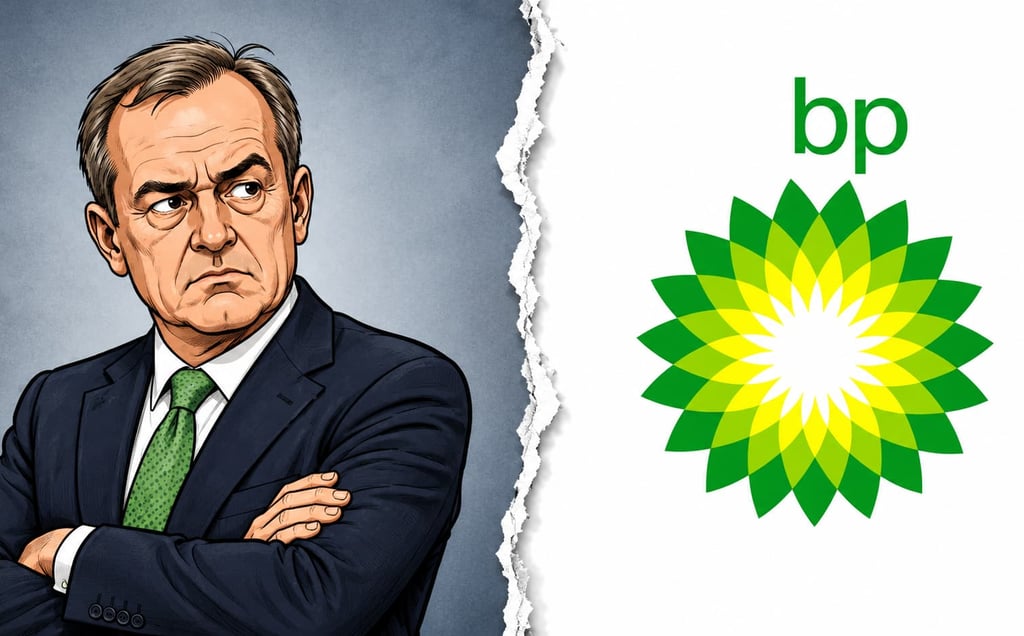
BP is in another boardroom fight, and this one isn't about a small company nobody has heard of.
This is BP, one of the biggest energy companies in the world, the company millions of people know from fuel stations, oil, gas, trading, refining, and energy projects.
It's not just a personal drama at the top. It's about power, trust, company culture, investor pressure, and whether a giant company can make big changes without breaking its own furniture in the process.
The man at the center of the story is Albert Manifold.
BP appointed him as chair in 2025. He joined the board on September 1, 2025, and took over as chair on October 1, 2025, after Helge Lund stepped down. BP said at the time that Manifold would help guide the company at an important moment.
He came from CRH, the Irish building materials group, where he had been chief executive. He wasn't a classic BP insider. He was brought in as someone who could help push change from the top. You can already see the tension, right?
Big old company, new outside chairman, pressure from investors, cost cuts, and strategy reset.
BP then removed Manifold with immediate effect. The board said it had serious concerns linked to governance standards, oversight, and conduct. The company said the board’s decision was unanimous.
Ian Tyler, a veteran British business leader best known as the former CEO of construction and infrastructure giant Balfour Beatty, with years of boardroom experience across major companies, was named interim chair while BP looks for a permanent replacement.
A board doesn't usually remove a chairman like that unless it believes the problem is serious, a chairman isn't a random employee. The chairman is supposed to help lead the board, guide the CEO relationship, protect shareholder interests, and make sure the company is governed properly.
If the person meant to protect governance becomes the person at the center of a governance problem, how does the board explain that to investors without looking like it hired the wrong person in the first place?
The accusations around Manifold are serious, but the full picture is still not public.
Reports say the board heard concerns that he had been verbally abusive, bullying toward employees, and had mishandled company information. Other reporting said people familiar with the matter described aggressive and unacceptable behavior toward colleagues, with whistleblower complaints playing a role in the board’s decision.
BP hasn't laid out every detail in public, which is common in sensitive board matters. But that silence also creates a problem. When a company says enough to shock the market, but not enough to fully explain the facts, everyone starts filling in the blanks. And when the blanks involve bullying, governance, and confidential information, people don't fill them in gently. They bring a shovel.
Manifold rejects the accusations.
He says he was removed without warning and without explanation, he disputes the way his conduct has been described, and says he won't allow what he calls a false narrative to go unchallenged.
In a longer defense, he admitted he may have pushed hard for cost cutting and better performance, but he denied wrongdoing. He also pointed to his personal style as proof that he was trying to set a serious example.
He said he avoided executive luxuries, made his own coffee, and tried to reduce unnecessary spending.
That part almost sounds like a scene from a corporate sitcom. The chairman says, “I made my own coffee.” The board says, “That's not the point.” The lesson is simple: making your own coffee may show discipline, but it doesn't automatically answer questions about how people were treated.
This is where the story becomes more than a he said, company said fight. It raises a harder question. What's the difference between strong leadership and bad conduct? Every business says it wants leaders who are direct, demanding, and urgent.
But when does “direct” become disrespectful? When does “demanding” become intimidating? When does “urgent” become chaotic? You can admire a leader who pushes people to move faster. Many companies need that.
But you also have to ask whether the push builds performance or damages trust. If people are afraid to speak up, that's not a high performance culture. That's a company playing musical chairs on a burning platform.
BP has been under pressure to improve results and simplify its strategy.
The company has moved back toward oil and gas after earlier years when it leaned harder into clean energy and transition plans.
Activist investor Elliott Management has pushed for lower renewable spending, cost cuts, debt reduction, and stronger focus on shareholder returns.
Manifold’s style and agenda appeared to fit parts of that pressure, he was seen as someone who wanted BP to become leaner and sharper. The problem is that investors may like cost discipline, but they don't like boardroom chaos. A cheaper company isn't automatically a better company if its leadership keeps exploding like a microwave with metal inside.
One of the more sensitive details is that Manifold reportedly met activist shareholder Elliott without directly informing other board members. The investor relations team was reportedly aware of the meetings, and the reporting said this wasn't necessarily a rule breach.
Still, the meetings were viewed as part of a bigger concern about whether Manifold was acting too independently. This chairman is supposed to manage the board process, not look like a separate power center. Even if nothing technically breaks the rules, governance is also about trust.
A board can survive disagreement but it can't survive members wondering who knows what, who is speaking for whom, and whether big conversations are happening off to the side.
Now think about BP’s new CEO, Meg O’Neill.
BP announced in December 2025 that she would become chief executive on April 1, 2026. She came from Woodside Energy and became the first woman to lead BP. She arrived with a major job already waiting for her. She had to help steady a company that had been through leadership changes, strategy pressure, and investor frustration.
Then, only weeks into her tenure, the chairman who helped shape the latest reset was suddenly gone. That's not exactly the welcome basket you dream of, most new CEOs want a clear runway. O’Neill got a runway with a governance storm parked on it.
BP has had too much top-level instability in recent years, former CEO Bernard Looney left in 2023 after admitting he hadn't been fully transparent with the board about past relationships with colleagues.
Murray Auchincloss later became CEO, then BP announced in December 2025 that he would step down, with Meg O’Neill taking over in April 2026. Now Manifold is out as chairman after less than eight months in the role. When one major leadership exit happens, investors call it a problem. When several happen close together, they call it a pattern. And patterns make people nervous because they suggest the issue may not be only one person, it may be the system around the person.
This is why the board is under the microscope too. The board brought Manifold in, the board put him in the chair seat, and the board also removed him. So the board now has to answer two questions at the same time. First, why did it believe he was the right person for the role? Second, why did it later decide he had to go so quickly?
Both can be true. A person can look right during hiring and then fail in practice. But when the role is this senior, the process is important. Did the board check enough? Did it understand the kind of leader BP needed? Did it move too fast because investors wanted change? Or did Manifold move too hard because he believed slow change would hurt the company?
This is the uncomfortable part of leadership, sometimes everyone thinks they're saving the company while they're also creating the next problem.
The market reaction shows why this isn't just an internal HR issue.
BP shares fell after the removal was announced, with reporting showing a 4 percent drop on the day of the announcement and more pressure afterward. Investors don't like uncertainty. They can price oil, debt, an production targets. But they have a harder time pricing boardroom trust.
When the chair leaves suddenly and the explanation includes conduct and governance, investors start asking whether more bad news is coming. They also wonder whether the new strategy will slow down, change direction, or lose momentum.
BP has been trying to balance two worlds.
One world wants BP to focus on oil and gas because that's where the cash is, the other world wants BP to take climate promises seriously and invest more in the energy transition. Manifold arrived during a period when BP was pulling back from parts of its previous green strategy and moving closer to traditional energy again.
That shift made some investors happy and others angry, there was also shareholder pushback around climate-related matters before Manifold’s removal. So this boardroom fight lands on top of a much bigger argument: What should BP become? A cleaner energy company? A sharper oil and gas giant? A hybrid? Or a company trying to please everyone and annoying everyone instead?
Big corporate stories often turn into share prices, board votes, and investor letters. But behind the language of governance and conduct are people who go to work every day. If employees felt bullied or verbally abused, that's serious. And if whistleblower complaints were made, that's serious.
A company can't say it wants performance while ignoring how people are treated. At the same time, fairness is also important. Manifold strongly denies the claims, and the public hasn't seen the full evidence.
That means a serious reader should hold two ideas at once. The company may have had real reasons to act, and Manifold may have real reasons to defend himself.
BP’s public language was broad. It said serious concerns over governance standards, oversight, and conduct. That kind of wording is legally careful, but it's also vague. The company may have chosen that language to protect employees, protect the investigation process, or reduce legal risk.
But vague language can create more noise. If you say too little, people assume the worst. If you say too much, you may create legal risk. That's the corporate version of walking across a wet floor while carrying hot soup, one wrong step and everyone is staring.
Manifold has pushed back hard and reportedly hired legal counsel. That doesn't automatically mean a lawsuit is coming, but it shows this may not end with a polite goodbye and a farewell cake. If he believes the company damaged his reputation or removed him unfairly, there could be more fighting.
If BP believes it acted properly to protect employees and governance standards, it may stand firm. Let me ask you, "When a senior executive is removed for conduct reasons, how should a company balance transparency, privacy, legal risk, and employee protection? I know, there's no easy answer. But the worse the facts are, the more careful every word becomes.
For BP, the biggest problem is confidence. The company needs investors to believe the strategy is stable, employees to believe the culture is safe, the board to look serious and united, the new CEO to look in control, and it needs the public to believe this isn't another episode in a long-running show called “What Now, BP?” That's a lot to ask from one company at one time. But that's the price of being a global giant.
When you sell energy to the world, your internal energy can't look like a loose wire.
The most balanced way to read this story is this: BP wanted change and Manifold was brought in to help create it. But change at the top can become dangerous when the lines of authority, conduct, communication, and trust aren't clear.
A hard-charging chairman may impress some investors, he may scare some employees, frustrate some directors, and he may also believe he's doing exactly what the company needs.
That's why leadership isn't just about being right.
It's about whether people can follow you without feeling crushed, confused, or cut out of the process.
Image credit: Elinaetly
Legal
No spam. Unsubscribe anytime.
Explore
Business insurance, simplified.
Contact
Join the Newsletter
© 2026 Elinaetly. All rights reserved.